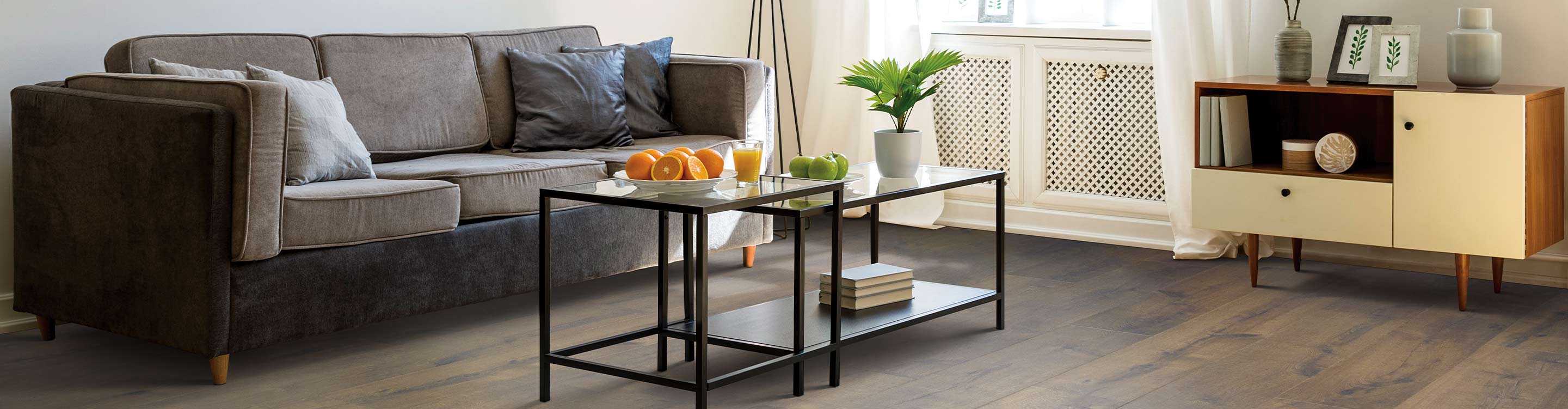
The floors in your home don't have to match, but they do have to work together. That's where a whole-home floor plan makes all the difference. Even if you're remodeling just one room at a time, having a clear vision from the start helps every choice feel connected. As your trusted flooring partner, we're here to help you make confident choices from the first room to the last. Read on for the planning decisions, zone strategies, and transition tips that make whole-home flooring work.
Flooring projects rarely happen all at once, but what matters is that every choice you make along the way is guided by the same vision. A whole-home plan gives you that foundation, so no matter which room you tackle first, the decisions get easier from there.
The best place to start is choosing a flooring style anchor. This is one floor that will set the tone for everything else. It doesn't have to appear in every room, but its color, finish, and feel should inform every other choice you make. Here are a few things to consider when choosing your anchor floor:
Once you have a style anchor, the next step is finding compatible options that work within that foundation. From there, budget planning gets easier. Knowing your whole-home scope helps you decide where to invest and where a more budget-friendly option still gets the job done. For example, a high-traffic living room might be worth prioritizing, while a guest bedroom could work with something simpler.
When planning whole-home flooring, it helps to stop thinking room by room and start thinking zone by zone. A zone is a group of connected spaces that flow into each other, either visually or physically. Keeping flooring consistent within a zone makes your home feel more open and cohesive, even if each zone uses something different.
Most homes break down into a few natural zones:
Thinking in zones is especially useful if you're not replacing all of your flooring at once. When you know which zone you're working in, you can make choices that connect to what's already there and set up the next phase naturally. It also makes transitions between zones easier to plan.
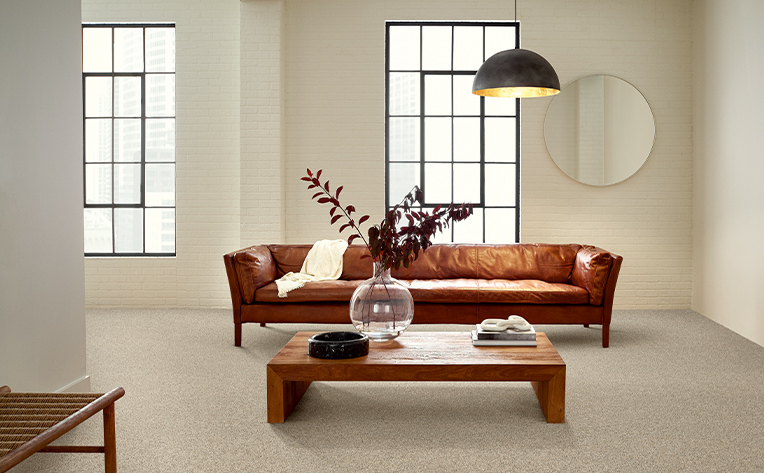
One of the most common questions homeowners have about whole-home flooring is whether every floor needs to match. The short answer is no. What truly matters is coordination. Floors that share a tone and finish family can look just as cohesive as identical materials, sometimes even more so.
The key is in the undertone. A warm oak hard surface in your main living areas and a warm beige carpet in the bedrooms feel like they belong together, even though they're completely different materials. That shared warmth is what the eye picks up on. Cool-toned floors work the same way. The materials can change, but the underlying tone should stay consistent throughout the home.
The placement of your floors matters just as much as the contrast itself. Rooms separated by a door give you more flexibility because the transition is natural and expected. Open-plan spaces are a different story. When two floors meet in a wide, connected area with no visual break, contrast can feel jarring rather than intentional. Save the bigger shifts for doorways and clearly defined spaces.
Here's three rules that make coordination easier:
When two floors meet, a transition strip does more than cover the gap. A well-chosen transition looks intentional, but a mismatched one draws the eye for the wrong reasons. Getting this detail right is one of the easiest ways to make a whole-home flooring plan look professionally done.
There are several types of transition strips. Each one serves a different purpose:
The finish of your transition strip matters too. Most strips come in wood, metal, and vinyl options. Matching the strip finish to one of the two floors it connects is usually the safest choice. In open-plan spaces where the transition is more visible, a strip that blends rather than contrasts is the right call.
Pro Tip: Placing a transition strip in the middle of a high-traffic walkway can feel awkward and look unplanned. Whenever possible, align transitions with doorways, natural thresholds, or the edge of a room. Your installer can help you map this out before any flooring goes down.
They don't have to. Floors that coordinate look just as cohesive as floors that match, sometimes more so. The key is staying consistent with tone and finish across materials. Where things go wrong is when warm and cool tones end up side by side, or when styles clash without a clear reason.
Rooms with doors give you more flexibility because the transition is natural and contained. Open-plan spaces need more consistency since the floors are seen together. In either case, stick to your overall style and choose neutrals where you can. Trendy or bold choices are harder to work with as the home evolves over time.
Group your home into zones and choose one floor per zone: one for main living areas, one for bedrooms, and one for wet areas like bathrooms and kitchens. If you're installing in phases, keep records of what you choose. Floors get discontinued, but having the product details on hand makes it much easier to find a close match down the road.
Look at inspiration from entire homes rather than individual rooms. Search online or in-person for designer showcases, home tours, and style guides show how floors work across a full space. Pay attention to what floor types appear in each area and how they connect. Finding a look you love at the whole-home level makes every individual decision easier.
There's no single best floor for every home, but there is a best floor for every situation. The right choice depends on the room, how it's used, and who's using it. A good whole-home plan usually includes two or three floor types that each do their job well in their zone, while keeping tone and finish consistent across all of them.
Thank you for contacting Carpet One Floor & Home. Your local flooring expert will reach out to you regarding your inquiry.